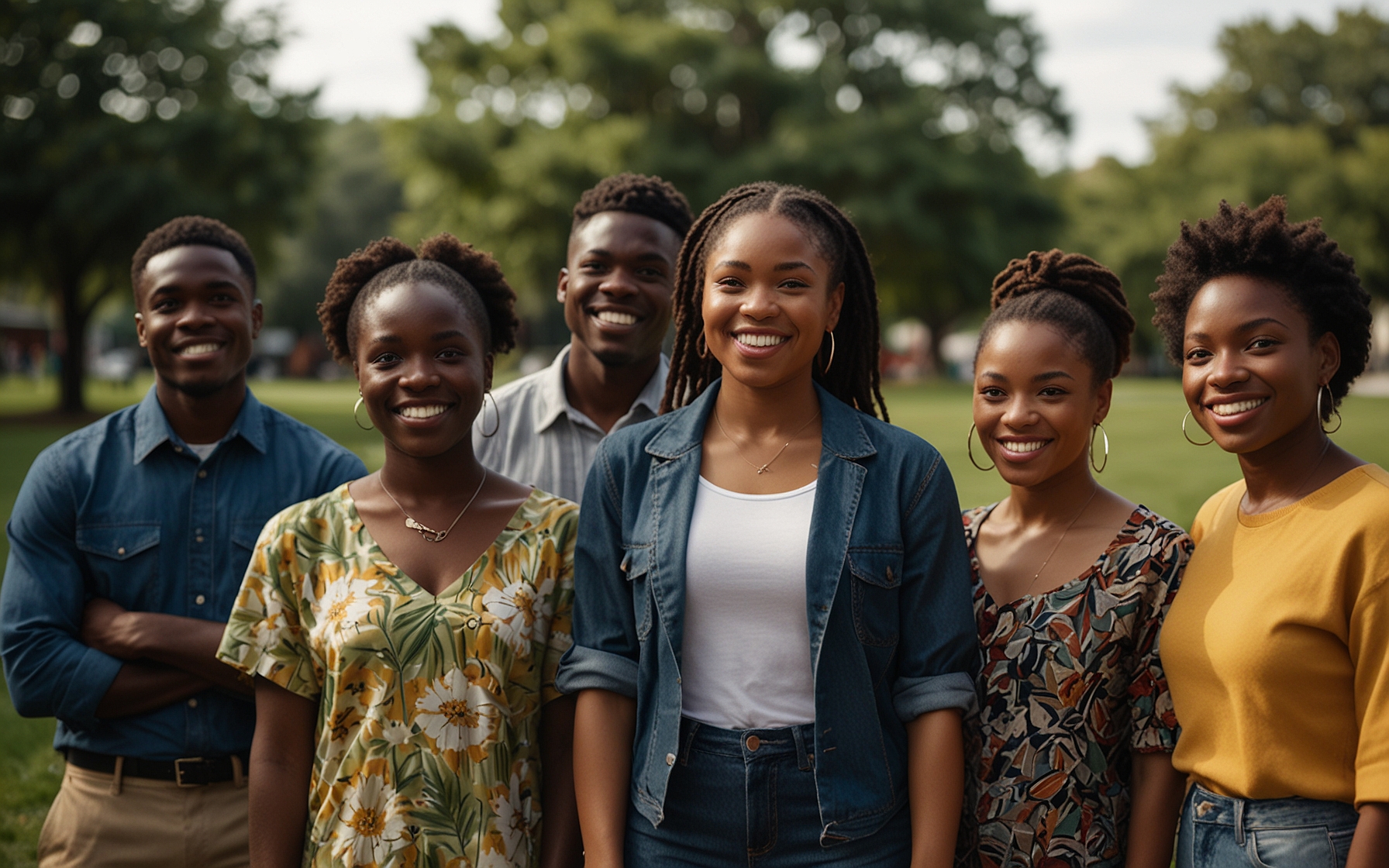
Across the African diaspora many of us are asking how to turn identity and history into real power for young adults and students. Strengthening our roots means deepening cultural, intergenerational, and transnational bonds, then using those bonds for education, leadership, entrepreneurship, mental well being, and civic engagement. Community building is not only about gatherings or heritage months. It is also about skills, networks, investments, and institutions that young people can build and lead. When we see our roots clearly, our futures get brighter and more organized too. And that future can start right now, not someday.
What Roots Really Mean
Community in the African diaspora is defined by identity, geography, and purpose. Identity is our Black and African heritage. Geography is global, from the continent to the Americas to Europe and beyond. Purpose is upliftment, opportunity, and justice. In practice culture and history are not separate from career or civic action. Roots are memory, languages, and stories. Futures are skills, mentorship, and investment in ideas that serve our people.
Key institutions now treat the diaspora as an organized and strategic actor instead of a loose set of individuals. The African Union recognizes the diaspora as the sixth region of Africa and operates a Diaspora Division to integrate diaspora people and organizations into Agenda 2063. Networks like African Diaspora Network convene innovators, students, investors, and community leaders so ties become projects, partnerships, and capital flows. Our connections are infrastructure, and we can design with them on purpose.
- Roots = culture, history, and intergenerational memory that ground leadership.
- Futures = skills, networks, and institutions young people can own and guide.
- Community building links identity to opportunity with clear pathways.
From Giving Back to Building Together
One major trend is the shift from remittances to strategic partnership. The diaspora already sends about 100 billion dollars each year. The new focus is to convert more of that flow into long term investment in science, technology, education, and AI enabled solutions. The African Diaspora Investment Symposium, run by African Diaspora Network, is a premier marketplace of ideas and investments where innovators, students, investors, and policymakers co create initiatives for inclusive growth.
Recent ADIS cycles form a homecoming arc that connects diaspora talent with African innovators, with future convenings planned on the continent. For young adults and students this expands the shape of community spaces. It includes innovation labs, pitch competitions, and investment forums, not only cultural gatherings. It opens routes to intern with African startups, join diaspora innovation fellowships, and work on cross border research and social enterprise projects. It is practical, not abstract.
- Treat diaspora spaces as launchpads for career and ventures.
- Attend or follow convenings such as ADIS to learn and connect.
- Join entrepreneur communities offering mentorship and pitch chances.
- Build formal partnerships with African or Caribbean universities, hubs, or NGOs.
Policy Pathways You Can Use
Policy is part of roots too. The African Union’s Diaspora Division mainstreams diaspora participation across AU departments and partnerships under Agenda 2063. The Division maps diaspora organizations, strengthens the AU capacity to work with them, accredits groups as observers and participants in AU summits, and promotes linkages with ECOSOCC and the Pan African Parliament. This legitimizes the diaspora as a formal stakeholder in African governance and development.
Why this matters for students and young professionals is simple. Youth and student organizations can act as policy advocates and development partners, not just cultural clubs. You can seek recognition and collaboration through AU diaspora channels, and align projects in areas like education access, climate, entrepreneurship, and health with Agenda 2063 priorities. Educators and program designers can include AU diaspora policies in courses on African politics, international relations, and Black studies. That builds confidence and clarity about how change really happens.
- Pursue AU related recognition and collaboration for youth groups.
- Align campus or community projects with Agenda 2063 for visibility.
- Teach institutional pathways so students can map concrete influence.
Culture, Healing, Tech and Leadership
Culturally grounded youth empowerment links culture, healing, and leadership. Cultural reclamation centers African heritage, languages, histories, and creative arts. Mental health and healing justice address racism, migration trauma, and intergenerational stress with culturally competent care and peer circles. Leadership pipelines build fellowships, youth councils, and mentorship designed for Black and African diaspora students. Transnational solidarity connects African American students with peers in Africa and the Caribbean for shared projects, dialogue, and activism.
Best practice is to co design with youth, combine storytelling with data, and build multi sector partnerships that include campuses, NGOs, local government, diaspora entrepreneurs, and AU linked bodies. Technology is a new root system for connection and empowerment. ADIS emphasizes the African AI and innovation ecosystem, with growth forecast from about 4.5 billion to 16.5 billion by 2030, and over 1,600 fintech startups. There is a call for diaspora capital and expertise to support AI, fintech, cleantech, and healthtech that serve communities across the continent and the diaspora.
- Mix Black cultural expression with leadership training and wellness.
- Host retreats, leadership institutes, and peer mentoring on campus.
- Invite speakers from African Diaspora Network and AU connected groups.
- Build tech mentorship for Black and African diaspora youth.
- Use online communities to grow cross border professional networks.
Your Roots to Futures Plan
You can build a simple plan that turns identity into impact. Use these steps in a campus group, a local nonprofit, or your own personal roadmap. Start small and be consistent. Move with community and mentorship. And remember that culture is infrastructure, not a side note. Its ok to iterate and learn as you go.
- Deepen your roots
- Study African and diaspora histories and contemporary politics with attention to Agenda 2063 and AU diaspora policies.
- Expand your community building skills
- Learn facilitation, organizing, conflict resolution, project management, and fundraising. Organize one local initiative and measure outcomes, even a small circle counts alot.
- Connect to transnational networks
- Follow African Diaspora Network and the African Diaspora Investment Symposium. Track communications from the AU Diaspora Division for collaboration options.
- Align career or venture with uplift
- Pick one intersection of your skills and a key community need. Design a small project or startup idea and seek mentorship from diaspora networks to refine it.
- Practice reciprocal mentorship
- Find mentors among older diaspora professionals and activists. Mentor younger students and pass on skills along with cultural grounding.
Culture should sit inside your leadership, tech, and entrepreneurship work, not outside it. Use story circles, podcasts, zines, and social media to document and share diaspora experience and innovation. Highlight success stories of Black and African diaspora students and founders at convenings and online. Pair discussions on AI, climate, or voting with performance, film, or storytelling from diaspora perspectives. These moves keep the work human and connected to memory and purpose.
Finally, plug into ecosystems that can carry you further. African Diaspora Network has convened more than 11,000 people around entrepreneurship, investment, innovation, and human capital development. Its programs unite the diaspora, allies, and the continent to fuel economic growth through entrepreneurship and social impact. The African Diaspora Investment Symposium positions Silicon Valley as a partner to African Silicon Savannahs and other hubs. Students and young professionals can volunteer, intern, or attend to access mentors, investors, and collaborators. Use these convenings to showcase campus projects or startups that serve Black and African diaspora communities. You dont need to do everything at once. Take one step, then another.
#Community #Culture #Empowerment #Diaspora #Unity