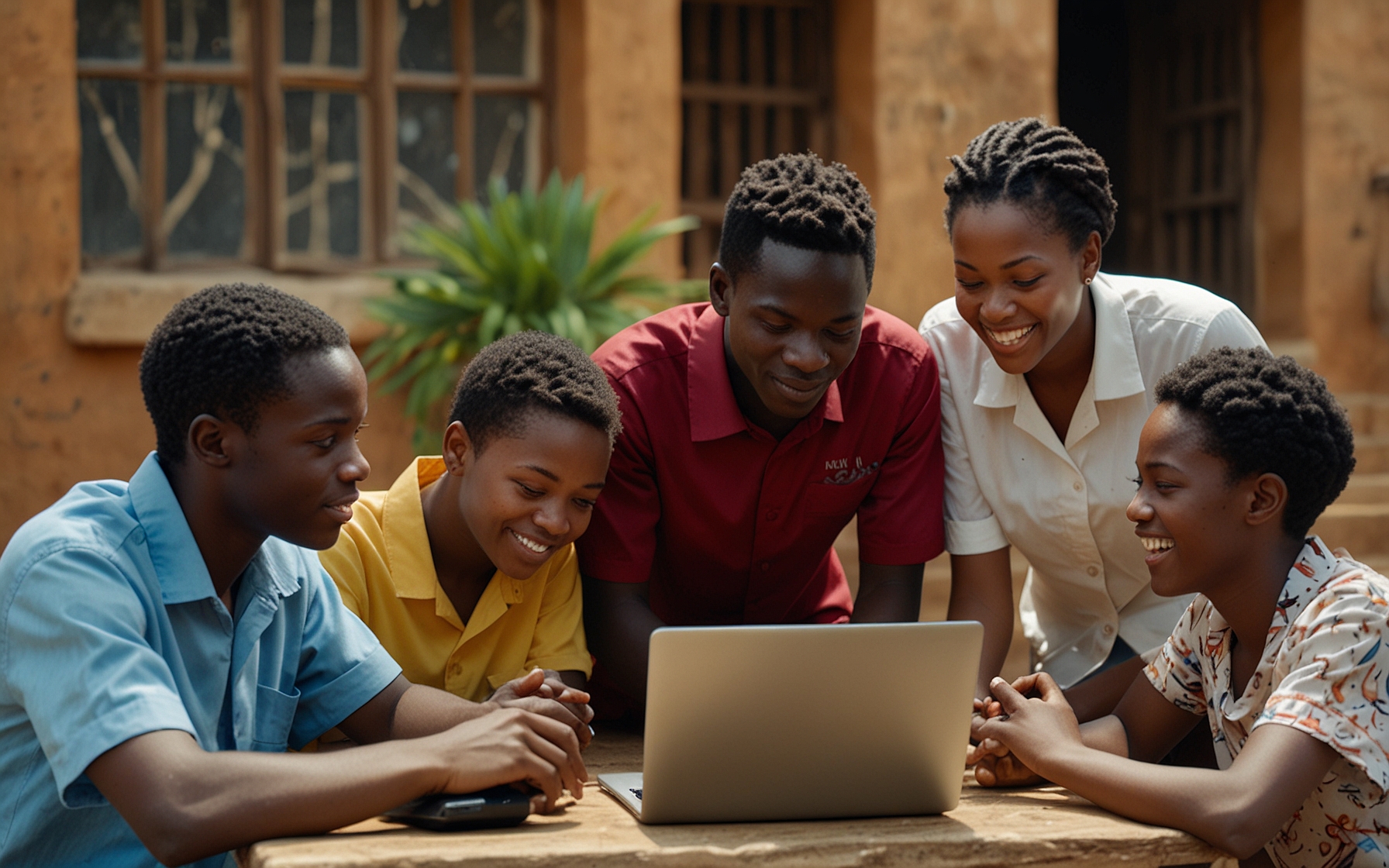
Across African communities today, the digital divide is narrowing yet it still feels stubborn in many places. Mobile networks have grown, and digital literacy programs are taking root in schools and community hubs. Still, many people in rural and low income areas face real barriers that block daily access and limit their chance to join the digital economy. Electricity can be unreliable. Devices are expensive. Data costs bite into tight budgets. And gaps in basic skills make it hard to use the tools that are available. The result is uneven participation for young people and adults who want to learn, work, create, or even connect with family. The story is one of momentum and of missing links that we can fix together.
Progress and persistent gaps
Phones are the on ramp for most people, which is both a win and a warning. Across 34 countries, 82% of people report access to a smartphone, but only 47% personally own one and only 31% use the internet daily. Non use is highest among the poor, the less educated, and rural residents. Household computer ownership rose from 26% in 2016 to 32% in 2021 to 2023, with big gains in places like Kenya and Guinea, yet it still sits below 20% in countries such as Malawi and Uganda. Sub Saharan Africa stands at 37% internet penetration in 2024, far below the global 67%, with some forecasts pointing toward 70% by 2030. That arc is encouraging, but it does not lift everyone the same way.
Affordabilty is a hard brake. Even with rising smartphone access, mobile data costs remain high at about $6.44 per megabyte, so people ration their usage or drop off entirely. Rural urban divides are sharp. In some nations you see 65 to 68% urban computer ownership and only 10 to 18% in rural communities. That difference locks many rural households out of modern education, health information, and markets. When internet access stalls, you get a map of opportunity that mirrors old infrastructure lines. Young people feel this the most when they try to self study or apply for jobs and can not stay connected every day.
Connectivity and infrastructure
Coverage has expanded, yet mobile broadband coverage gaps widened to about a quarter of the population by 2024. High costs and electricity shortages slow adoption even where signal is present. In major cities like Nairobi, Lagos, and Johannesburg, urban elites enjoy fast internet that powers fintech, media, and creative work. Outside those cores, small businesses struggle to run e commerce or tap telemedicine because speeds are low and power cuts bite. Investments are needed to deliver high speed, affordable access that actually reaches the last mile and keeps the lights on. There is upside on the horizon with 5G projected to boost key sectors by 2026 and create high tech jobs. A digital economy readiness lens shows how divides in access to power and devices replicate broader inequalities, which means governments that prioritize electricity and device access can unlock economic participation. Projections also suggest that more than half of sub Saharan Africa could be online by 2026, a clear signal that mobile first strategies will continue to empower youth and community networks if costs come down and coverage holds steady.
Education and youth empowerment
Education efforts across the continent are building skills from the ground up. One Laptop per Child programs have delivered devices and content in Rwanda, South Africa, and Nigeria. Rwanda’s Smart Classrooms effort puts technology directly into learning spaces. In Nigeria, a national literacy strategy shaped by NITDA and GIZ is guiding a coordinated approach. The Angaza Center is expanding in 2025 with inclusive digital literacy that reaches rural high schools and includes deaf and hard of hearing students. Its model pairs donated laptops and tablets with US student ambassadors who train peers, so learning sticks through mentorship and practice. Community led training in Nigeria has prepared over a thousand local trainers using local languages and cultures, which boosts engagement and keeps knowledge in the community. KALAAN in Ivory Coast focuses on women and girls, showing how targeted support can shift who benefits from digital tools and who leads.
Youth programs are growing beyond basic access. DCA Academy and Mission Africa offer practical training in computer basics, digital safety, and creative skills that connect to real opportunities. Daily internet users at 31% tend to build stronger self study skills, and the contrast between professionals at 81% and agricultural workers at 16% highlights why closing education gaps is central to closing the divide for young people. Digital safety training for youth and educators is also expanding so new users can participate with confidence. Meanwhile, open knowledge efforts such as library digitization by community groups and Free Knowledge Africa show that locally made content and inclusive design can improve relevance and reach.
Inclusion and what works
The strongest models are context specific and collaborative. Public private partnerships help fund infrastructure and spark innovation, but peer mentorship makes programs personal and durable. Inclusive programming that welcomes marginalized groups, from rural youth to deaf students, is not just the right thing, it actually grows the pool of capable users and creators. Diaspora connections matter too. African American students and other diaspora youth engage as mentors and donors in device drives, linking classrooms across borders and building real pathways for shared learning. Mobile remains the bridge for remote learning and innovation, yet mobile internet penetration has hovered near 27% in some recent estimates. Affordability and language remain barriers. That is why programs that teach in local languages and lower the cost of entry have staying power. Free Knowledge Africa and similar initiatives show how community digitization unlocks access for everyone, especially when connectivity is scarce or expensive. These are the kind of practical steps that turn access into agency.
Steps we can take now
Closing the digital divide is not just a headline, it is a set of do able actions that communities, educators, companies, and policymakers can start or scale today. Here are focused moves drawn straight from current initiatives that are already working on the ground for youth and families.
- Donate devices to rural schools and youth hubs through established programs that combine hardware with training. Partner with groups like the Angaza Center that include deaf and hard of hearing students and use US student ambassadors to coach peers, so devices do not sit idle and learning keeps going.
- Launch community based mentorship using local languages for digital skills. Build on proven models where over 1,000 local trainers were prepared in Nigeria, because trainers who speak the language and understand culture drive higher engagement and better outcomes for young adults.
- Advocate policy that cuts the price of data and improves electricity reliability. Use clear evidence on where non use is highest among the poor, less educated, and rural residents to guide targeted investments that reduce the 25% coverage gap and bring costs below painful levels.
- Build skills hubs that replicate DCA Academy style programs. Focus on computer basics, creativity, and digital safety, then connect participants to social impact projects, so new skills translate into jobs, entrepreneurship, and community solutions right away.
There is real momentum. Smartphone access is widespread even if personal ownership and daily use lag. Household computers are slowly rising. Projections point to more than half of sub Saharan Africa online within a few years and potentially 70% by 2030. Yet the work is not finished until rural students can load a lesson without worrying if the power will fail, until farmers can check prices without breaking the bank on data, and until young creators from villages to townships can publish thier work safely. The path forward is practical. Make connectivity affordable. Get devices into the right hands. Teach with context. Mentor youth. And keep inclusion at the center so no community is left behind. If we keep our focus there, the divide will keep shrinking, and the next generation will not just use technology, they will shape it in ways that fit their lives.
#digital #access #technology #education #youth