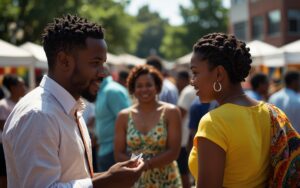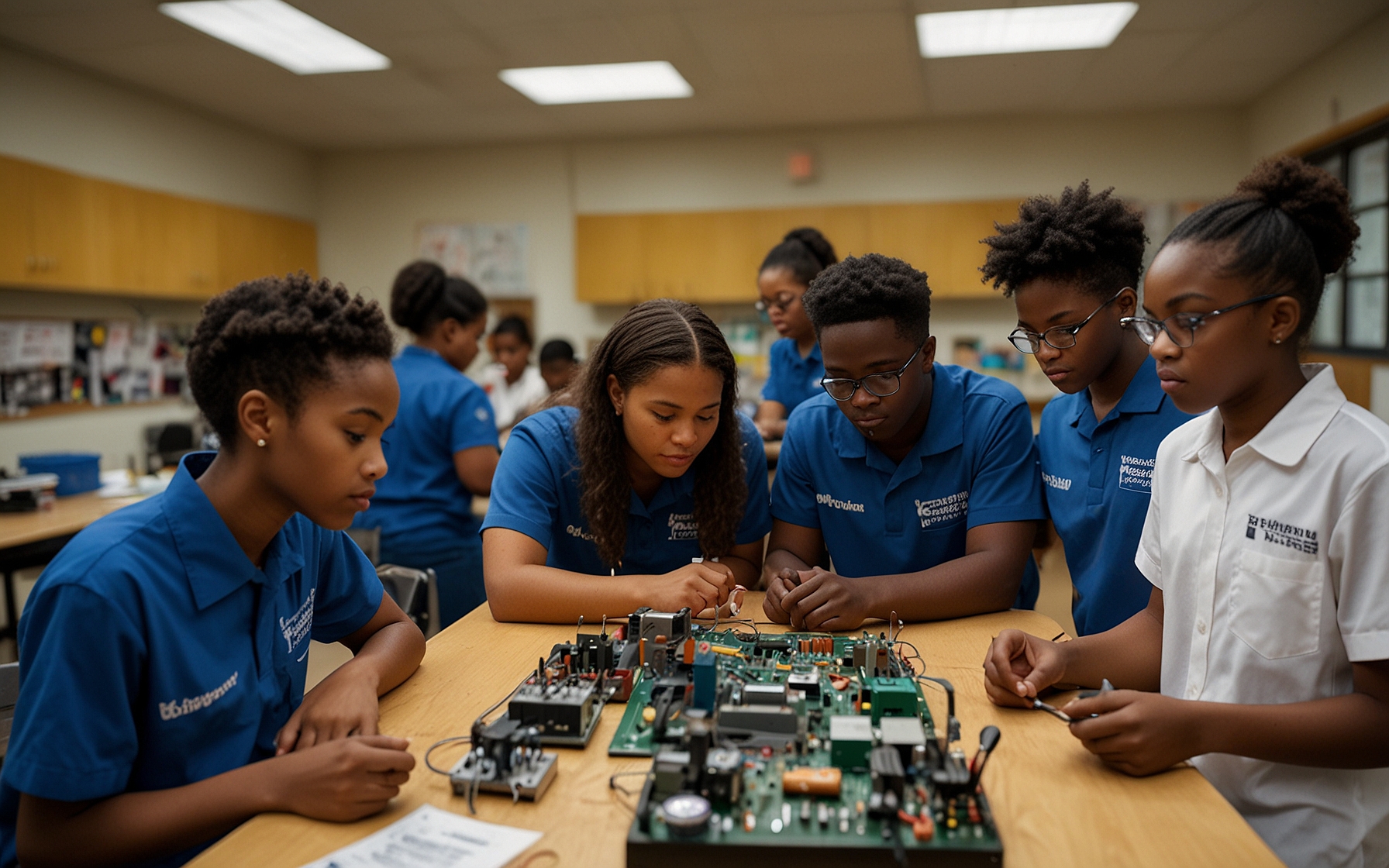
African American students bring talent, drive, and curiosity to science, technology, engineering, and math. Yet the pathway into these fields is too often narrowed by gaps in exposure, preparation, and support that compound over time. The data is clear and it is sobering. Black students are still only about 9% of the STEM workforce, and persistence in college lags with 40% completing STEM majors compared with 62% for White students. At the same time there is real momentum. Historically Black Colleges and Universities continue to power a major share of Black STEM graduates. New mentorship models and aptitude based guidance are showing how to turn ability into oppportunity. If we center equity and belonging, we can boost outcomes at every step from K through careers.
What the data really shows
Underrepresentation persists across high school, college, and the workforce. Black students earned no more than 9% of STEM degrees in 2018 and that figure barely moved over the last decade. In the workforce the share is also about 9%, which signals a long running pipeline problem that begins well before college. Attrition in college is a major factor. Only 40% of Black students who start in a STEM major finish with a STEM degree. That compares to 62% for White students and about 70% for Asian students. The socioeconomic picture adds more strain. Students in the lowest socioeconomic group face about 34.2% attrition while the highest group faces about 10.7%. That gap does not happen by accident, it reflects differences in resources and preparation.
Preparation starts in K to 12. Yet in high schools that serve mostly African American students, calculus is offered in less then one third of schools and physics in only about 40%. Even though Black students make up around 16% of high schoolers, only about 9% enroll in AP courses. When advanced coursework is not available, it becomes harder to build confidence, meet prerequisites, and signal readiness to selective programs. Nationally the United States awarded more than 4 million STEM degrees between 2012 and 2022, which is a 16% increase over expectations. That is encouraging, but the gains have not flowed equitably to Black students. The big picture tells us that talent is there in abundance, yet the system does not consistently see it or support it well enough.
HBCUs power and proof
HBCUs are a proven engine for STEM success. They produce about 25% of Black STEM baccalaureate degrees while enrolling only a small share of Black students overall. From 1995 to 2004, HBCUs accounted for about 46% of Black women who graduated in STEM disciplines. Nearly 30% of Black science and engineering doctorate recipients can trace their bachelor’s origins to HBCUs. Eight HBCUs have ranked among the top twenty producers of Black science and engineering bachelor’s degrees in the modern era. That is a stunning return given the chronic underfunding these colleges face.
What explains this outsized impact. HBCUs create environments where students feel known and believed in. They address preparation gaps for first generation and low income learners with focused tutoring, cohort models, and hands on lab time. Faculty and staff often mentor students beyond the classroom. Career services connect undergraduates to research experiences, internships, and professional networks that might otherwise feel out of reach. These supports are not extras. They are the backbone of persistence. When the culture says you belong here and here is the support to thrive, students stick. That is why investing in HBCUs is not charity, it is smart strategy to grow the STEM workforce and widen opportunity.
Aptitude, exposure, and belonging
New evidence from a 2024 report by YouScience and Black Girls Do STEM looked at more than 328,000 students. It found large gaps between what students can do and what they have seen. In advanced manufacturing there is roughly a 75% gap between aptitude and exposure for Black students. In health science the gap is about 57%. For Black girls the mismatch is even more striking, with about 88% more aptitude than interest in manufacturing. This means students have the natural strengths to excel, yet the world around them has not shown what those strengths can become.
Representation changes the equation. About 75% of educated Black adults say that seeing Black high achievers in STEM would make it more likely for them to pursue similar paths. Among Black STEM workers, many recall school moments that lit a spark. Around 69% remember feeling excitement about thier abilities and about 68% saw the relevance of what they were learning. Those experiences build identity and purpose. Organizations like Black Girls Do STEM, led by Cynthia Chapple, run workshops in construction and engineering that let girls try, tinker, and lead. YouScience, guided by Edson Barton, uses performance based assessments to match student aptitudes with real careers. These are practical tools that help students beleive in themselves because they can see and feel the fit. When belonging is paired with authentic exposure, interest follows ability rather than drifting away from it.
Closing equity and access gaps
Black adults often point to several barriers that slow STEM progress. Many cite the lack of mentors as a major reason, especially those with college degrees. Access to quality education is another common theme with about one half or more pointing to uneven school quality. Stereotypes and biases still shape expectations and gatekeeping. The result is less access to advanced math and science, fewer AP opportunities, and smaller networks to open doors. Equity work must start early and continue through college and into the first jobs.
Scholarship and mentorship models can blunt these barriers. The UNCF Fund II Foundation STEM Scholars Program invests about 48 million dollars over five years to support 500 high school students with scholarships, internships, and mentoring. This end to end approach shows students a path that runs from high school to college and into a career. It is also vital to focus on gender equity. The share of Black women earning doctorates in STEM dipped from about 1.3% to 1.1% over the 2010s. That is a warning sign. Efforts that center the experiences of women of color, build safe learning spaces, and bring in Black women professionals as mentors are not optional. They are key to reversing the slide. Finally we cannot ignore the digital side. Aptitude assessments, virtual labs, and remote mentoring can widen access when local options are thin, as long as schools ensure every student has devices and connectivity. Without that, digital tools do not help much at all.
Action steps that work
Change happens when we match talent with opportunity and wrap it in support. Here are concrete moves that families, schools, and organizations can start today. Each one aligns with the research and has a track record that is promising, not perfect yet but promising alot.
- Educators and parents implement aptitude surveys by middle school using performance based tools so students discover strengths early and connect them to real STEM careers.
- School leaders expand access to calculus, physics, and AP classes in schools serving Black students. If staffing is tight, partner across districts or tap virtual options so no student is blocked.
- Students and young adults explore HBCU summer bridge programs, visit campuses, and apply to scholarship pipelines like the UNCF Fund II STEM Scholars to secure mentoring and internships.
- Organizations and employers partner with groups such as Black Girls Do STEM to host hands on workshops and paid externships that show the day to day of engineering, computing, and manufacturing.
- Mentors and role models make yourselves visible. Speak in classrooms, share your story, and highlight setbacks you overcame. Students need to see people who look like them doing the work.
- Counselors and advisors help students track aptitudes versus interests over time. When interest dips but aptitude is strong, add exposure through clubs, competitions, or shadow days rather than steering away.
- Community advocates push for device and broadband access, and for data that tracks who is getting advanced coursework. If the numbers are off, ask why and fix it.
The promise of STEM for African American students is not a mystery. It shows up in aptitude data, in the success of HBCUs, in the power of mentorship, and in the pride of graduates who return to teach and lead. The barriers are not a mystery either. They are rooted in uneven access, social messages that narrow dreams, and systems that reward confidence more than potential. We can change that. When schools offer the right classes, when families and mentors fuel belonging, and when organizations invest in scholarships, internships, and early exposure, students do not just persist. They thrive. There is still alot of work to do, and we should not pretend it is easy. But the path forward is visible and it is within reach if we all lean in.
#STEM #education #innovation #digital #empowerment